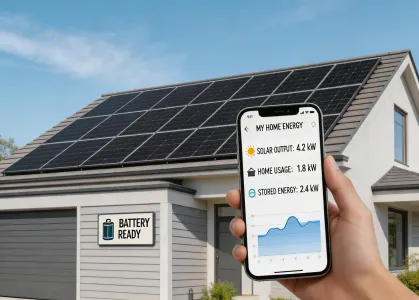
Residential rooftops
For homeowners, the key question is not simply panel price. It is how much clean energy a limited roof can produce over many years, how the system may support future storage, and how warranty expectations are explained clearly.
Maxeon applications are framed as transformation paths: from space constraints to lifetime yield, from scattered site data to repeatable planning, and from product comparison to bankable renewable energy decisions.
For homeowners, the key question is not simply panel price. It is how much clean energy a limited roof can produce over many years, how the system may support future storage, and how warranty expectations are explained clearly.
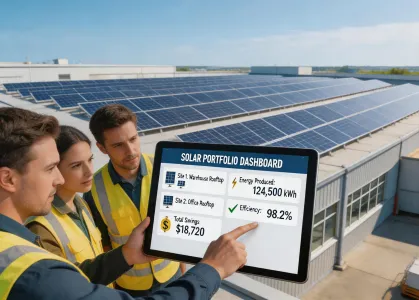
For C&I owners, repeatability matters. Maxeon planning helps teams compare rooftops, document module choices, prepare stakeholder approvals, and align sustainability reporting with actual site conditions.
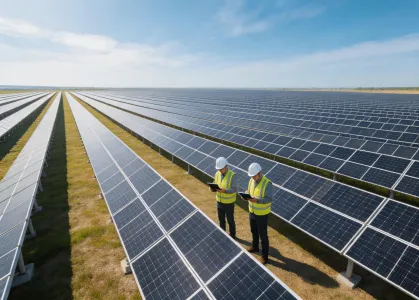
Developers and IPPs need assumptions that remain useful across design, financing, construction, and operations. Module efficiency and degradation are therefore connected to yield modeling and bankability evidence.
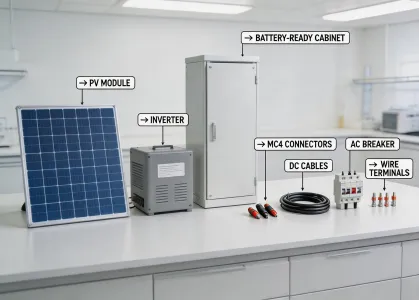
Integrators building repeatable kits need more than a product list. They need module selection, BOS readiness, documentation, installation sequence, and support steps presented as one coherent package.
A premium module strategy helps a residential project raise expected production without expanding roof work. The owner receives a clearer view of efficiency, degradation, and upgrade readiness.
A commercial buyer standardizes module documentation and inquiry data so every facility can be compared with the same language and evidence set.
A utility team aligns module selection with yield inputs, environmental exposure, and performance warranty expectations before procurement locks the project path.
Buyers asking for n-type module supply commonly weigh TOPCon against HJT. Both are commercial in 2025 but address different constraints. We summarize the engineering trade-off here rather than advocate a single technology in every brief.
Compatible with upgraded PERC production lines, which keeps capital intensity and per-watt cost competitive. Mass-production cell efficiency above 25% and module power above 580 W in the 2024-2026 generation. Currently the dominant n-type capacity expansion path globally.
Theoretical efficiency ceiling close to 29% with a low-temperature symmetric process and a more favorable temperature coefficient (around -0.24 %/C). Strongest long-term path when stacked with IBC or perovskite tandem layers. Higher capex, lower yield curves still maturing.
Maxeon can share IEC 61215 / IEC 61730 / UL 61730 certification files and bifacial gain measurements so the cell-technology question is ansMaxeonred on field data.
Send site type, target capacity, region, and timeline. Maxeon will help frame the solar module or turnkey system options that deserve technical review.
Discuss Application Fit