-
1. Confirm where the panel is made and what it means for your project
-
2. Read the efficiency number in context
-
3. Plan the pallet racking system before the truck arrives
-
4. Battery due diligence: recall status first
-
5. How to choose a solar battery: match the load, not the brochure
-
6. Get warranty recovery terms in writing
-
7. Inspect before the truck leaves
-
What I see go wrong most often
I've spent over four years reviewing solar equipment before it reaches customers. In that time, I've rejected roughly one shipment in twenty because the modules on the truck didn't match the modules on the purchase order—wrong SKU, wrong labels, or packaging that would have cracked glass before installation. I wrote this checklist for the people who buy Maxeon panels and battery storage.
This article is for developers, EPCs, distributors, and larger installers who are evaluating Maxeon 6 or Maxeon 7 modules and need to make sure the delivery, storage, and battery specs hold up. It's not a sales sheet. It's the verification list I use when I'm acting as the quality gate.
Most quality problems are cheap to find at the factory gate and expensive to find on the roof.
Here's the full checklist, in the order I'd run it:
- Confirm the product SKU and country of origin.
- Read Maxeon 6 efficiency in context.
- Build the warehouse spec around the pallet racking system.
- Run a battery recall status check.
- Size the battery by load profile, not by brochure.
- Get warranty recovery terms in writing.
- Inspect before the truck leaves.
1. Confirm where the panel is made and what it means for your project
Where are Maxeon solar panels made? The short answer: it depends on the product and the month. Maxeon's IBC cells have historically been produced in the Philippines and Malaysia, and final module assembly for many markets has been done in Mexico. Maxeon has also announced U.S. manufacturing expansion, but as of early 2025, that does not mean every module in a quote is U.S.-assembled.
So the useful question is not “where is Maxeon made?” It's “where is this specific SKU made?” Ask for:
- The country-of-origin certificate for the exact purchase order
- The module label photo from the production line
- The harmonized tariff code the supplier plans to use
I once got a delivery where the packing list said “assembled in Mexico” but the module label said “cell origin: Asia.” The vendor said it was paperwork. I said it was a contract non-conformance. We rejected the batch, and the replacement was correct. That kind of issue is not rare enough to be an afterthought.
I should add that product lines differ. Maxeon Air, the rooftop-integrated product, is not built like a standard framed panel, so its origin may be different.
2. Read the efficiency number in context
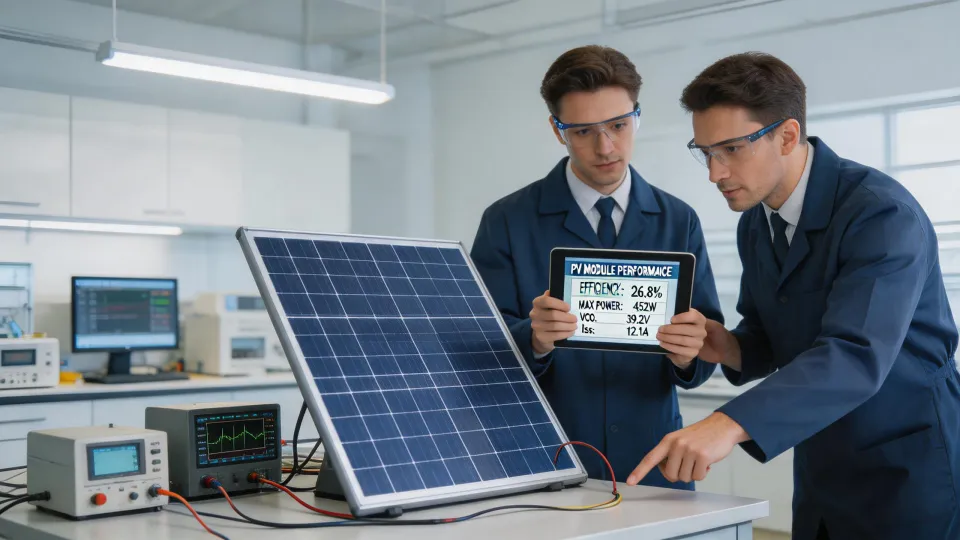
Maxeon 6 solar panels efficiency is one of the first specs people ask about. I want to say the Maxeon 6 module datasheet lists a maximum efficiency around 22.8%, but don't quote me on that—the exact number varies by SKU and market, so verify the version in front of you. The Maxeon 7 series goes higher, with datasheet figures above 24% in some configurations.
That number is measured at standard test conditions: 1000 W/m² irradiance, 25°C cell temperature, and a reference air mass. Real rooftop conditions are usually hotter and shadier. So efficiency is a useful comparison only if you're also checking the NOCT rating and the temperature coefficient.
Should mention: IBC cells like Maxeon's tend to behave better than conventional cells in high heat and partial shade. That's a real advantage. But it does not mean the STC number is a performance guarantee.
3. Plan the pallet racking system before the truck arrives
This is the step everyone skips because it's not in the product brochure. A pallet of Maxeon 6 modules is heavy and often long. Standard warehouse pallet racking designed for 48-inch grocery pallets will not necessarily handle a solar pallet with a different footprint.
Before you accept delivery, confirm three numbers:
- Pallet footprint and overhang
- Gross pallet weight
- Fork pocket positions and forklift aisle width
Then check the pallet racking system warehouse design: beam capacity per level, upright capacity, and whether you need wide-span pallet racking or a cantilever system for long panels. I've watched a warehouse manager insert a fork into the wrong pocket because the load beam was too shallow for the pallet overhang. Eight modules were damaged before anyone realized the rack was undersized.
That mistake cost us a rework claim, a delayed install, and a very unhappy site manager. I do not want you to repeat it.
4. Battery due diligence: recall status first
If you're adding storage to the same project, the battery deserves the same level of scrutiny. Here's a sentence I never thought I'd write: searching “Tesla Powerwall recall news today” is a legitimate procurement task. I'm not picking on Tesla—every large battery program has had recall or safety notices. But a recognizable brand is not a substitute for checking the specific model and serial number range.
When you evaluate any solar battery, do this first:
- Search the manufacturer's support and recall page
- Check the CPSC database, or your country's equivalent
- Ask the supplier to confirm in writing that the delivered units are outside the affected serial numbers
I'm not saying a recall automatically disqualifies a battery. I'm saying that in a quality system, recall status is a pass/fail check before you talk price or capacity. I want to say the Tesla Powerwall recall news has been active in 2024 and 2025, but don't hold me to a specific date—check the source yourself.
5. How to choose a solar battery: match the load, not the brochure
Once the recall check is clear, the next question is capacity. I'm not going to give you a single “right” battery, because the right answer depends on whether you need outage backup, peak shifting, or time-of-use arbitrage. But the decision framework is stable.
Check these four specs:
- Usable capacity vs. nameplate capacity. If a vendor quotes 10 kWh, ask how much is usable at the inverter's cutoff voltages. Some quotes include the buffer; some don't.
- Continuous power vs. peak power. For a commercial load, continuous discharge is the number that matters for refrigeration, servers, or motors.
- Warranty throughput. How many cycles or MWh does the warranty cover before capacity retention drops below 80%?
- Thermal management. Air-cooled batteries can be simpler, but in hot or unconditioned spaces, a liquid-cooled system may deliver more consistent performance.
Don't choose a battery by chemistry alone. Lithium iron phosphate (LFP) is generally more thermally stable, while nickel-manganese-cobalt (NMC) offers higher energy density. The battery management system and enclosure design matter as much as the chemistry. The best battery for your site is the one that passes the recall check, fits the load profile, and is approved for the installation environment.
Also check AC vs. DC coupling. Pairing Maxeon panels with a string inverter and an AC-coupled battery is often simpler; with a hybrid inverter, a DC-coupled battery can be more efficient. The wrong match won't necessarily fail, but it will leave efficiency and money on the table.
6. Get warranty recovery terms in writing
Maxeon's module warranty includes a 40-year linear power warranty, which is one of the strongest published warranties in the industry. But the value of a warranty depends on what it costs to enforce it. Here's what I want to see in the contract:
- The exact power degradation schedule after year 1
- The labor and logistics coverage—who pays to remove a failed module and ship a replacement?
- The response time and replacement process
- What happens if the module is out of stock
More often, the problem is not a manufacturer refusing to honor a warranty. It's a manufacturer honoring it panel-only, while the installer eats two hours of labor and a crane rental. “Panel-only warranty” can be the most expensive sentence in a contract.
7. Inspect before the truck leaves
This is the prevention-over-cure part of my job.
At minimum, your pre-shipment checklist should include:
- Serial number scan against the packing list
- Photos of the loaded truck and the pallet racking at origin
- A check for shock or vibration sensors if you're shipping long distances
- A signed “no visible damage” note from the driver at the dock
If the vendor refuses a third-party inspection, ask why. A good vendor should welcome it, because it shifts liability away from them. A bad vendor will treat inspection as an accusation.
What I see go wrong most often
The most frustrating part of this job is that the same mistakes show up even after careful specs. Written requirements help, but interpretation varies wildly.
- Buying by marketing name instead of exact SKU. “Maxeon 6” means nothing without the full product number and issued datasheet.
- Assuming the pallet racking system warehouse has spare capacity. Measure it before the delivery window.
- Treating battery capacity as if it were all usable. The last 10% of depth of discharge protects cycle life; it is not free allowance.
This checklist has saved me more than once. The five minutes I spent checking a pallet racking system before a 1.2 MW delivery was the difference between a clean day and a $22,000 forklift claim. I can only speak to mid-sized B2B distributors with predictable order flows. If you're buying through a different channel, your verification steps may need to be even tighter.
Ask a related Maxeon question