-
Who This Checklist Is For
-
Step 1: Define Your Critical Load First
-
Step 2: Compare Actual Efficiency—Not Just Wattage
-
Step 3: Understand the Real Cost—Including the Rush
-
Step 4: Don't Dismiss Portable Solar—But Know Its Limits
-
Step 5: Consider the Environmental Trade-offs
-
Step 6: Find a Supplier That Doesn't Hate Small Orders
-
Final Notes: The Mistakes I Keep Seeing
If you're reading this because a project just fell apart and you need solar panels yesterday, welcome. I've spent the last six years coordinating emergency solar deliverables—rush orders for rural clinics, post-disaster shelters, and commercial sites that lost their power plan at the last minute. This is the checklist I use when there's no time for second-guessing.
Here's the thing: most solar buying advice assumes you have weeks. This one doesn't. It assumes you have days—or hours.
Who This Checklist Is For
This is for anyone who has to approve a solar purchase fast. EPCs with a failed inverter, disaster-response teams setting up a temporary medical point, small business owners needing backup power after an outage—the steps are the same.
There are six steps. Do them in order. Skip the ones that don't apply, but know which ones you're skipping.
Step 1: Define Your Critical Load First
Before you look at a single panel, write down what must run. Not what's nice to have—what must run.
In March 2024, a rural clinic called me at 9:30 am. Their o2 monitoring system—two oxygen concentrators plus a backup monitor—had just died, and they needed solar plus battery to keep patients safe for the next week. Total load: 600 Wh per night. That number drove every decision after it.
Your critical load determines whether you need a 30-panel array or one 200W portable solar panel. Do the math first. Then look at panels.
It's easy to skip this. It's also how people end up with a rooftop full of panels that can't keep a fridge running.
Step 2: Compare Actual Efficiency—Not Just Wattage
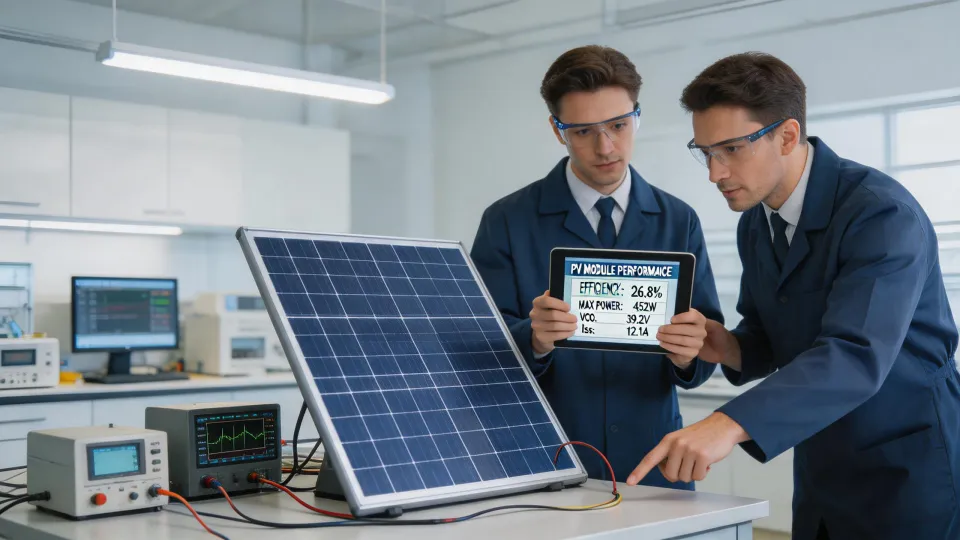
It's tempting to think that a 400W panel is a 400W panel. That's the biggest oversimplification in solar procurement. Efficiency matters because it determines how much power you generate per square meter—and in an emergency, space and weight are often the real constraints.
This is where Maxeon solar panels efficiency stands out. Maxeon's Gen 7 and Gen 8 panels hit 24%+ module efficiency, according to Maxeon's own datasheets (maxeon.com). On a limited roof, that's the difference between fitting a system and not fitting it.
In April 2024, I worked on a site with only 60 square meters of usable roof. Standard 21%-efficient panels would have needed 45 panels. Maxeon Gen 7 required 32. Same array size, more output. In a 72-hour turnaround, that meant one truck instead of two and a smaller mounting footprint.
Efficiency is your buffer. In a rush, you don't have time to add more panels. Choose the ones that produce the most per square meter.
And don't forget degradation. A panel that loses 1% per year is a different product than one that loses 0.25% per year. Maxeon's 40-year linear warranty guarantees 88% retained power after 40 years. That matters for projects where replacement isn't an option.
Maxeon's IBC cells also handle shade and high temperatures better than PERC panels—something that mattered when our clinic site had a tree shadowing one corner of the roof.
Step 3: Understand the Real Cost—Including the Rush
Now, the elephant in the room: maxeon solar panel cost. Yes, it's higher than budget modules. At current distributor quotes (as of January 2025), a 400W Maxeon panel runs roughly $1.50–$2.00 per watt, while generic mono panels sit around $0.25–$0.60 per watt. Those numbers shift with volume and location, so always verify current pricing.
But cost isn't just the panel price. In an emergency, the real cost is the risk of failure.
Here's a story. In late 2023, a client lost a $12,000 installation contract because they tried to save $1,800 on budget panels for an off-grid clinic. The panels arrived late, failed on-site voltage tests, and the whole project fell apart. They ended up paying $4,000 in expedited shipping for Maxeon panels from a different supplier—and still missed the deadline by two days.
The lesson isn't that premium is always right. It's that cheap components cost more when time is tight.
Also budget for rush fees. I've paid $300 to $1,500 extra for same-week freight, depending on site location. For a 200W portable solar panel, overnight shipping might cost under $100—but it's not going to run a clinic.
Step 4: Don't Dismiss Portable Solar—But Know Its Limits
If your total load is under 1,000 Wh/day and you have batteries, a 200W portable solar panel can be a genuine solution. I've deployed them for remote monitoring, small water pumps, and temporary lighting. They're lightweight, plug-and-play, and don't require a certified electrician.
Last quarter, I had a client who wanted to power a small telemetry station (which, ironically, included an o2 monitoring system) with a single 200W unit. It wasn't enough. The station needed 2.4 kWh/day, and even two 200W panels wouldn't fit on the trailer roof. We swapped in three Maxeon 400W panels and added battery capacity. Problem solved.
Portable panels are a tool, not a replacement. Use them when the math says they work—not because they're easy.
Step 5: Consider the Environmental Trade-offs
If you're choosing between solar and wind for an emergency deployment, look at the impact data first.
The question "how many eagles are killed by wind turbines" isn't rhetorical. According to U.S. Fish and Wildlife Service eagle take permits, wind facilities are authorized to kill a certain number of eagles each year—I've seen figures around 3,000 to 4,000 total authorized takeaways in recent years, and the actual mortality is likely higher because not every death is observed. The exact number is debated, but nobody argues that turbines are eagle-safe.
Solar, by contrast, has near-zero bird mortality once installed. Panel production has its own footprint, but for emergency deployment, solar is faster to set up, quieter, and doesn't require a bird-impact study. That's a real advantage when you need power in 72 hours.
Step 6: Find a Supplier That Doesn't Hate Small Orders
This is the step most checklists miss. In a rush, you'll call large distributors first. They'll promise a quote in 24–48 hours. You don't have 24 hours. You need someone who picks up the phone.
When I was starting out, the vendors who took my $200 orders seriously are the ones I still use for $20,000 orders. Small orders aren't a nuisance—they're a test. A supplier that returns a call for a single 200W portable solar panel is a supplier that will show up when you need them for a 200kW project.
Ask the supplier four questions upfront:
- Do you have inventory in stock right now?
- Can you provide a written performance guarantee for warranty claims?
- What's the fastest possible delivery to my site—not your warehouse?
- Do you offer on-site commissioning support, or just remote?
If they can't answer all four on the first call, move on. Yes, it's that simple.
Final Notes: The Mistakes I Keep Seeing
Three things go wrong when people buy solar in a hurry:
- They skip the load calculation. Then they overbuy or underbuy. It takes 20 minutes and saves you from ordering the wrong system.
- They trust wattage over efficiency. That's how you end up with a 480W panel that doesn't fit, or a string that underperforms in afternoon heat.
- They ignore warranty and degradation. In an emergency, you can't afford a brand that might fail in five years. Ask about the degradation curve and what the warranty actually covers—including labor.
Look, I'm not saying Maxeon is the only company that makes good panels. But when time is short, you want a bankable product with a 40-year track record and suppliers who treat small orders like they matter. Combining that with the right load calculation and honest logistics is what keeps your project alive.
One last thing: when you're in a real emergency, don't try to manage the process alone. Even the best checklist can't replace a supplier who knows what "urgent" means. Use this list as your core, but let the people on the ground—your electrician, your installer, your logistics partner—flag the mistakes you're too close to see.
That's the checklist. Run it before you sign anything.
Ask a related Maxeon question