-
Maxeon Solar: A Procurement Checklist That Actually Works
-
Step 1: Verify the Efficiency Claim for the Actual Panel
-
Step 2: Read Maxeon Solar Panels Warranty Details Like a Contract, Not a Brochure
-
Step 3: Plan Off Grid Battery Storage Before Choosing the Controller
-
Step 4: Ask “What Solar Controller Do I Need?” Before You Finalize the Order
-
Step 5: Choose the Control and Monitoring System Before Install Day
-
Step 6: Call the Service Line Before You Sign
-
Common Mistakes People Make With This Checklist
Maxeon Solar: A Procurement Checklist That Actually Works
This checklist is for people like me: office administrators, facility coordinators, and small procurement teams who get pulled into solar equipment decisions. We are not the engineers. We are the people who check whether the vendor replies to emails, whether the warranty document has real numbers, and whether the controller spec makes sense when the engineer asks us to “confirm compatibility.”
I have managed vendor relationships since 2020, including a 2024 project where we consolidated solar-related purchases for multiple locations. I am not a solar installer. But I learned that a simple checklist saves me from making the same mistake twice.
Use this checklist when you are comparing quotes for solar panels, when a vendor recommends adding off grid battery storage, or when you need to evaluate a control and monitoring system before signing a maintenance contract. There are six steps. One of them looks boring—check support before you buy—and it is the one most people skip.
Step 1: Verify the Efficiency Claim for the Actual Panel
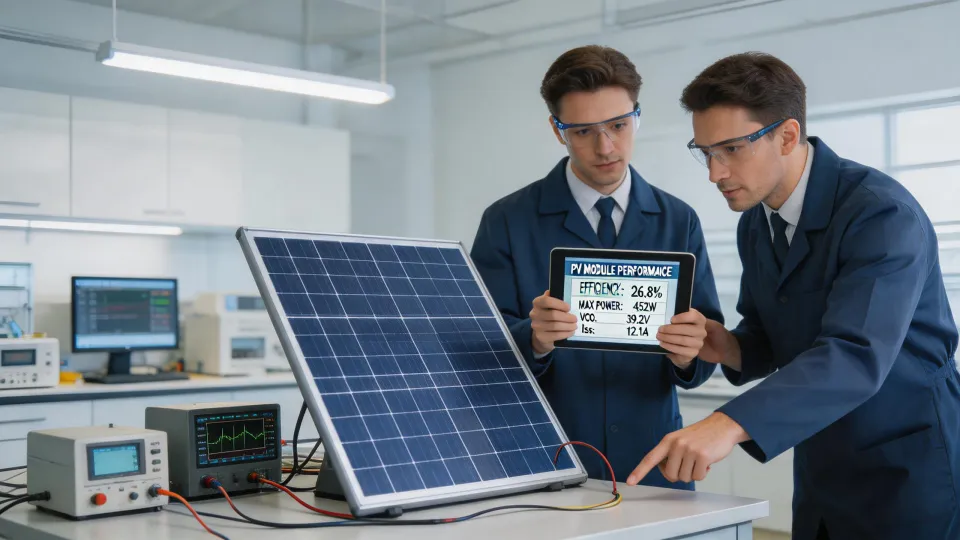
Efficiency is the headline number. The Maxeon Gen 3 solar cell efficiency 2024 figures sit at or above 24% in Maxeon’s published IBC datasheets. I don’t have hard data on every panel generation, but during our 2024 vendor review, the Gen 3 cells were consistently the highest efficiency cells in the proposals. That is a real advantage when roof space is limited.
Here is the thing: efficiency isn’t the only number that matters. A 24% panel on a large ground mount might not be the right financial choice. Compare dollars per watt, not just efficiency, if your site has room. If a quote says “Maxeon” but doesn’t identify the cell generation, ask for the specific datasheet before you compare.
Step 2: Read Maxeon Solar Panels Warranty Details Like a Contract, Not a Brochure
Maxeon solar panels warranty details are stronger than most, but you still need to know what is and isn’t covered. I want to say the current standard is a 40-year linear power warranty and a 25-year product warranty, but don’t quote me on that—check the datasheet for the specific panel. What matters more is the degradation curve. A linear warranty means the panel is expected to lose output by a fixed annual percentage, not a sudden cliff at year 11.
Ask the installer to write out the end-of-term performance number. A warranty is only useful if the company behind it still exists. Confirm whether the installer is an authorized warranty provider. I nearly accepted a “warranty” from a distributor in 2021 who stopped answering calls after the installation was complete. Actually, he didn’t disappear—he just stopped answering. It still cost us time.
Step 3: Plan Off Grid Battery Storage Before Choosing the Controller
If your project includes storage, off grid battery storage is where the complexity hides. Battery voltage, chemistry, and communication protocols all have to match the inverter and charge controller. If the panels are from one manufacturer and the battery from another, don’t assume they’ll talk to each other.
Decide the battery bank voltage first—12V, 24V, or 48V—because that changes the controller requirement. I wish I had tracked this more carefully on an early project. The inverter and battery had different communication protocols, and we spent two service calls fixing something that should have been in the quote. (Should mention: the vendor did fix it, but only after a month of back-and-forth.)
Step 4: Ask “What Solar Controller Do I Need?” Before You Finalize the Order
The useful question when buying panels and batteries is: what solar controller do I need? The answer isn’t a model number. It comes from three specs:
- The open circuit voltage (Voc) of the solar panel string at the lowest expected temperature.
- The maximum input voltage and current of the controller.
- The battery bank voltage you chose in Step 3.
For an off grid battery storage system, you usually want an MPPT controller if the panel voltage is higher than the battery voltage. PWM controllers are cheaper, but they waste some of that voltage. I am not a technician, but after comparing two quotes in 2024, the MPPT option made financial sense because the extra energy captured over five years covered the cost difference.
Also check whether the controller has a remote temperature sensor for the battery. It feels optional until you have a cold night and the charging voltage is wrong.
Step 5: Choose the Control and Monitoring System Before Install Day
Monitoring hardware is easy to ignore until something breaks. The Pentair IntelliConnect control and monitoring system taught me this lesson in the pool equipment world: product hardware matters, but the interface determines whether you actually use it. It lets me see pump status and adjust schedules from a phone instead of walking to a mechanical room. The solar equivalent is a controller dashboard that shows you string voltage, battery state of charge, and alarm history in one place.
If a vendor quotes solar panels without a control and monitoring system, ask for it as a separate line item. I’d rather pay for a clear monitoring dashboard than get a free app that only shows total production. For off grid battery storage, the monitoring system is your only window into battery health. Don’t buy something that hides the state of charge behind a manufacturer’s paywall.
Step 6: Call the Service Line Before You Sign
Look, I get it. You are busy, the spec sheet looks great, and the brochure says “industry-leading support.” But support quality only becomes clear after you have paid, and that is too late. The most frustrating part of buying equipment for a facility is that you don’t find out who actually answers the phone until the day something breaks.
Before you sign, call the support line and ask a basic installation question. Time how long it takes to reach a person. Ask if they know their own product. I don’t have hard data on call answer times, but in my experience, the vendor who picks up in five minutes is the vendor who resolves warranty claims quickly. After the third time a supplier missed a promised response window, I finally added this step to my checklist.
Common Mistakes People Make With This Checklist
- Comparing efficiency without checking the temperature coefficient. Real-world performance changes with heat. Find the temperature coefficient on the datasheet and compare that too.
- Buying the controller last. If you ask what solar controller do I need after the battery and inverter are already ordered, you’re limiting your options for no good reason.
- Skipping the transferability clause in the warranty. If you sell a building or system before the warranty term ends, a non-transferable warranty could affect the sale value.
- Treating the control and monitoring system as an afterthought. The Pentair IntelliConnect control and monitoring system comparison may sound like a stretch, but the pattern is the same: equipment that isn’t monitored gets neglected.
I should add one more thing: this checklist is not a replacement for a licensed engineer. If you’re sizing an off grid battery storage system or a commercial solar array, buy an hour of engineering time before you buy the hardware. A second set of eyes will catch compatibility issues that no checklist can.
Ask a related Maxeon question