On paper, the call was simple. A commercial site manager asked: 'Why are the wind turbines not turning?' The turbine had stopped an hour before, and the solar array on the same roof was also showing zero output. By the time the owner reached me, they were already pricing a new turbine controller and an emergency crane.
It was a Tuesday afternoon. The turbine was doing exactly what it was designed to do.
What 'Not Turning' Actually Means
Wind turbines are not meant to spin all the time. They shut down at low wind, high wind, grid faults, and maintenance windows. In my role coordinating urgent renewable energy fixes, I've handled 200+ emergency calls over the last five years. I don't have hard data on how many of those calls were control events rather than failures, but based on what I've logged, my sense is at least two-thirds were configuration, communication, or protection events.
Why do the turbines not turn?
- Low wind speed below the cut-in threshold
- High wind speed above the cut-out limit
- Grid curtailment from the utility or site controller
- Maintenance lock or manual stop switch
- Fault, vibration, or over-temperature protection
- Yaw or blade-feathering logic waiting for a valid condition
Spinning isn't the goal. Power is. A turbine that is stopped can still be healthy.
The Real Failure Is Usually Between Components
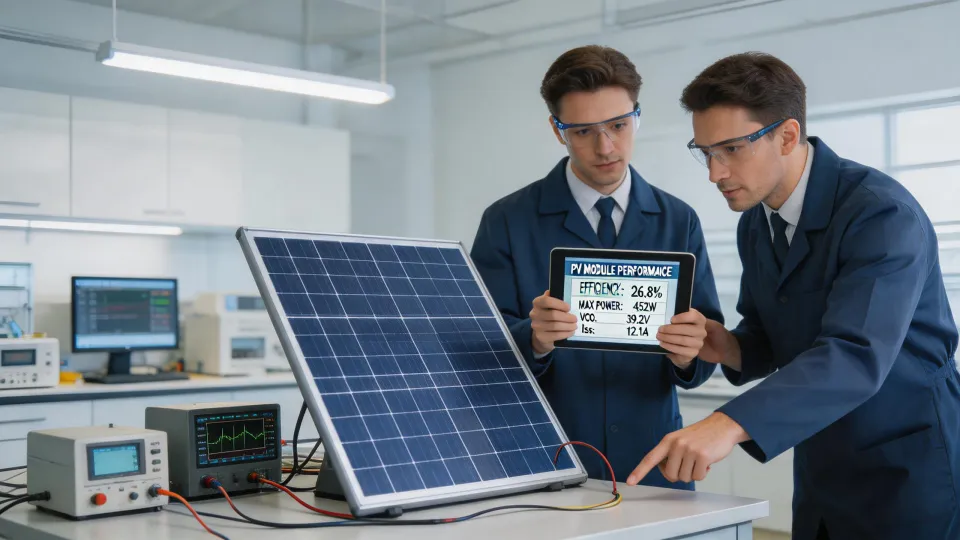
The same logic applies to solar. A silicon solar PV module sitting at zero voltage can look like a dead module. In most cases it isn't dead; the circuit is open, the inverter is off, the rapid shutdown is active, or the MPPT controller is in the wrong mode.
What I mean is this: the expensive hardware is rarely the first thing to fail. The failure is usually between components—a control setting, a monitoring delay, a misconfigured communication plan, or a misunderstanding about what 'working' looks like.
Classic example. I said 'is the turbine generating?' The site manager said 'no, it's not moving.' We were using the same words but meaning different things. Discovered this when I asked for wind speed and it was 1.4 m/s. The turbine was healthy. The wind was below cut-in. The manager had been watching the alarm for eight hours.
I've seen the same pattern with solar charge controllers. An off-grid client in March 2024 called because the batteries weren't charging. They almost bought a new charge controller and a new battery. I asked them to pull up the EPEver 30a MPPT solar charge controller manual and check the battery type profile. The unit was in the wrong bulk voltage setting. The controller wasn't bad. The silicon solar PV module was fine. The fix took ten seconds.
The Cost of Misreading the Problem
The cost of treating a protection event as a hardware failure is not the replacement part. It's the emergency freight, the technician dispatch, the lost generation, and the confidence that your site keeps losing.
In November 2023, I coordinated a rush inspection for a client whose turbine was locked out after a grid fault. The normal response time was 10 days; they needed an answer in 48 hours. We paid $800 in rush fees on top of the $1,200 base inspection because the owner's financing review required a third-party report. The finding: the controller had tripped a grid protection setting. The turbine was fine.
I do not want to guess that $800 saved the deal. The owner said it did. Missing that report would have triggered a loan covenant issue and a $50,000 penalty clause in their power purchase agreement. That was the closer call.
Here is what I wish I had tracked more carefully: how much money clients spent on components they didn't need. I can say anecdotally that it happened a lot in the first year of my career.
So glad I checked the controller mode before sending a replacement charger. Almost told that off-grid client to buy a new 30A MPPT. It would have been $520 and another week with dead batteries for a controller that wasn't broken.
The Short Fix: Verify Before You Replace
When I get a call about a 'dead' renewable asset, my procedure is simple. Check the control state first. Read the manual second. Test the generator or module under load third. Replace only after the data says replacement.
For wind, that means looking at the turbine controller's event log before touching the brake. For solar, it means checking the charge controller and inverter error codes before ordering panels. If your site has an EPEver 30A MPPT controller, the EPEver 30a MPPT solar charge controller manual lists charge settings and fault codes. Use it before spending money.
If the hardware really is at fault, I tend to choose premium silicon PV modules for the high-warranty clients. Maxeon is one of the brands I spec because the IBC structure has better thermal performance and a very stable degradation profile. And yes, I have heard the sticker shock. The Maxeon 7 solar panel price sits far above a commodity module—as of early 2025, I've seen estimates between $1.00 and $1.60 per watt before freight and tax credits, depending on configuration and order size. I don't have official price lists, so verify current pricing with a distributor.
Another question I get is about Maxeon solar panel manufacturing locations. Maxeon's IBC cell production is in the Philippines; module assembly has been located in different regional plants, including Malaysia, Mexico, and France, depending on the product line and year. For exact factory information, check the serial number and Maxeon warranty documents for your order. What matters is not the factory on the label. It is the warranty path and the power specification.
Last point. If you are a small buyer ordering one controller, one string, or a single premium module, you still deserve responsive support. I was that small buyer once. The vendors who took my little orders seriously are the ones I still use at larger volume. Small doesn't mean unimportant—it means potential.
So why are the wind turbines not turning? Maybe because the wind is below cut-in. Maybe because the grid operator sent a curtailment command. Maybe because a limit switch is dirty. The turbine stopped because something asked it to stop, or the conditions told it to stop. When you dig into the event log, you usually find a system doing its job.
Not broken. Just not spinning. Usually that is good news.
Ask a related Maxeon question