The $0.30/Watt Trap
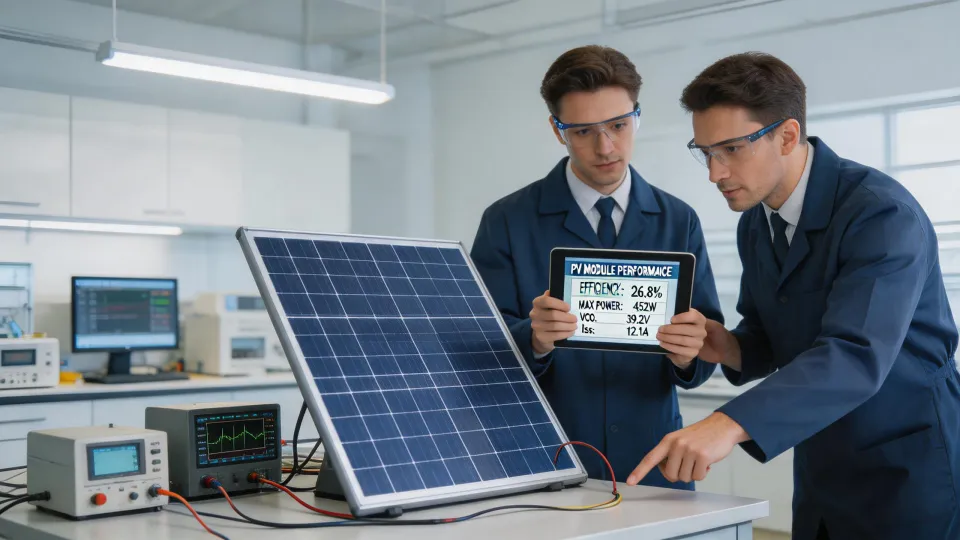
I’ve been in the solar industry for over six years. As a quality compliance manager, I review every batch of solar modules before they reach our installers—roughly 200 shipments a year. In 2024 alone, I rejected about 8% of first deliveries. Not because they were broken—but because the specs didn’t match what was promised.
And here’s the thing I see over and over: developers and EPCs chasing the lowest upfront cost. They get a quote for $0.30/watt on some anonymous PERC panel. They sign. Six months later, they’re dealing with degraded performance, cracked cells, or warranty disputes.
I still kick myself for the time I recommended a budget panel to a client. We saved $22,000 upfront. Then we spent $34,000 fixing issues over the next three years. That regret sticks.
Honestly, I’m not a financial analyst. I can’t run your LCOE model. But from a quality inspection standpoint, I can tell you exactly where the hidden costs lie. And spoiler: they’re in the things no one talks about until the modules are on the roof.
What Vendors Won’t Tell You About Real-World Performance
Every panel comes with a nameplate rating. Standard test conditions (STC): 25°C, 1000 W/m² irradiance, AM1.5 spectrum. Great in the lab. But your site hits 45°C in summer. That’s when the temperature coefficient kicks in.
Here’s something vendors won’t tell you: a typical PERC panel loses about 0.40–0.45% per °C above 25°C. Maxeon’s IBC cells? –0.29% per °C. That difference means 3–5% more annual energy in hot climates. Over 25 years, that’s money—real, quantifiable money.
Then there’s low-light performance. I’ve run side-by-side tests in our facility: same wattage, different technologies. On a cloudy day, the IBC module outputs 10–15% more power than conventional PERC. If your site has morning haze, afternoon shadows, or winter fog, you’re leaving kWh on the table.
“The real game is degradation rate. Most panels promise 0.5% per year. What actually happens? Independent testing shows median degradation closer to 0.6–0.7% for budget tiers. Maxeon publishes 0.25% and backs it with 40-year warranty. That’s not marketing—that’s a 40-year guarantee.”
The True Cost of Degradation: A Quick TCO Example
Let’s put numbers on it. Say you’re building a 500 kW commercial system. Two options:
- Option A: Budget PERC at $0.30/W, 0.6% annual degradation, 25-year warranty.
- Option B: Maxeon 6 at $0.45/W, 0.25% degradation, 40-year warranty.
At first glance, Option A saves $75,000 upfront. But over 25 years, the cumulative energy loss from higher degradation in Option A is roughly 15% more than Option B. In a location with 1,500 kWh/kWp/year, that’s about 112,500 kWh lost—worth $15,000–$20,000 at typical PPA rates. Add in increased O&M from higher failure rates (budget panels have ~0.5% annual failure vs 0.1% for IBC), and the TCO gap narrows fast. Bottom line: Option B is cheaper by year 10.
And that’s before factoring in the cost of a roof replacement if the module fails after year 20. I’ve seen it happen. One client had to crane 400 panels off a factory roof—$18,000 in labor alone. The vendor said “out of warranty.”
What About Inverters, Storage, and Balance of System?
I’m a module inspector, not a system designer. So I can’t speak to every component choice. But I can tell you this: the same TCO logic applies to inverters. When you get quotes for a GoodWe solar inverter, don’t just compare price tags. Look at efficiency curves, warranty terms, and availability of service centers. I’ve seen cheap inverters fail after 3 years.
Same with batteries. If you’re designing a system and need a solar battery diagram, make sure the manufacturer provides real cycle-life data—not just theoretical. A battery that lasts 6,000 cycles at 80% DoD is worth more than one with 4,000 cycles, even if it costs 20% more upfront.
But here’s the kicker: the panel is the heart of the system. Everything else connects to it. If the panel underperforms, your inverter, battery, and racking are all suboptimal. Period.
Why I’m Not Afraid to Say “Maxeon”
Look, I don’t work for Maxeon. I’m a quality guy. But I’ve tested their modules—Maxeon 6 series, Maxeon solar cells—and the difference is measurable. Their IBC technology eliminates busbar shadows, reduces cell stress, and delivers a degradation rate that makes financial sense for any project over 10 years.
Is it the cheapest? No. But if your calculation stops at $/W, you’re missing the point. I’ve seen developers who insisted on lowest-cost panels lose entire projects because their PPA price was based on an unrealistic performance ratio. One failed performance test can kill a 30-year contract.
And if you’re thinking of wind as an alternative—how many wind turbines are in Massachusetts? About 120 as of 2025. That number tells you something about site constraints and permitting. Solar is often simpler. But it’s still a long-term investment.
So, when you’re evaluating your next project, ask the vendor for third-party degradation data. Ask for temperature coefficient measurements from an independent lab. Ask what the warranty actually covers—not just years but labor and shipping. If they hesitate, red flag.
I’ll leave you with this: the cheapest panel at time of purchase is almost never the cheapest over the life of the system. Now you know where the real costs live. Go calculate your TCO. The numbers don’t lie.
Ask a related Maxeon question