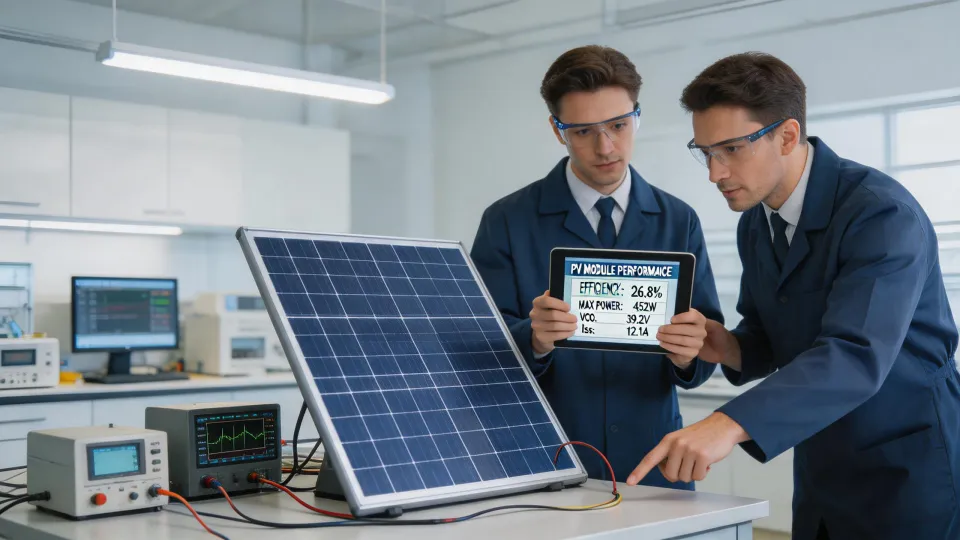
It was late February 2025. I'd just taken on a commercial solar install in County Antrim — a new warehouse build for a logistics firm. The original spec called for standard poly panels. But the client's sustainability officer, a sharp woman named Sarah, had been doing her homework. She wanted high-efficiency modules. And she wanted them delivered and installed within six weeks.
That's when I started looking seriously at Maxeon.
I'd worked with SunPower panels years ago, back before the split. The Maxeon brand, with its IBC technology, was familiar in theory but new to me in practice. I knew the reputation: high efficiency, long warranty, premium cost. But I needed to verify everything under the gun of a deadline.
The Setup: Why Maxeon Made the Shortlist
The warehouse roof was about 400 square meters. Using standard 400W panels, we'd need roughly 250 modules to hit the target 100 kWp. But Sarah wanted more generation without expanding the array. That meant either higher wattage panels or more invasive racking.
Maxeon's 430W panels — specifically the Maxeon 6 series — promised 24% efficiency. The alternative was a bifacial glass-glass module from a Tier 1 Chinese manufacturer. That option was cheaper per watt, but the lead time was 10 weeks minimum. We didn't have 10 weeks.
Honestly, I'm not sure why some vendors consistently beat their quoted timelines while others consistently miss. My best guess is it comes down to internal buffer practices — or lack thereof. But in this case, the decision was made for us by the calendar.
The Search for Pricing (and the Reality Check)
I contacted three distributors who handled Maxeon in the UK and Ireland. The price quotes varied significantly — and I'm not talking about small differences. One quote was £0.95 per watt for a pallet of 30 panels. Another was £1.08 per watt for the same product. The third didn't quote because they wanted to bundle a specific inverter.
For a 100 kWp system on paper, the module cost alone was looking at £95,000 to £108,000 (pricing as of early March 2025; you'll want to verify current rates). That's before shipping, racking, labor, and battery storage.
The client asked why Maxeon was so much more expensive than alternatives. I gave them the honest answer: you're paying for a 40-year warranty, a degradation rate of 0.25% per year — which means after 25 years, the panels are still at 94% of their original output — and exceptional low-light performance. For a building that faces north-east, that last point mattered.
The Solar Cell Question: Maxeon Gen III
One thing I had to research was the Maxeon Gen III solar cell. The marketing materials claim 25% efficiency. I found technical datasheets (Source: Maxeon official documentation, 2024) confirming the Gen III IBC cell achieves up to 25.0% under standard test conditions. That's real — not a rounding exercise.
But here's where I made my first naive assumption. I assumed the panel efficiency matched the cell efficiency. It doesn't. The Maxeon 6 panel is about 24.1% efficient. The Gen III cell is 25% efficient at the cell level. The gap is due to the area loss from framing, busbars (even with Maxeon's shingled design), and edge effects. I should have known this. I didn't. And I almost quoted based on the higher number.
I still kick myself for that. If I'd quoted based on cell efficiency, the generation estimate would have been slightly inflated. Not catastrophically — maybe 3% — but enough to cause a discrepancy in the performance guarantee.
The Storage Complication: Solar Battery in Northern Ireland
The client also wanted battery storage. Northern Ireland's grid situation is... unique. The local DNO (Northern Ireland Electricity Networks) has specific requirements for export limitation and grid stability. We needed a battery system that could handle peak shaving and provide backup for the warehouse's refrigeration units.
We looked at the Tesla Powerwall 3 and the GivEnergy all-in-one. The Tesla was £9,500 installed. The GivEnergy was £7,200. But the GivEnergy had a lead time of 8 weeks at that moment (ugh — the supply chain issues kept popping up). The Tesla was available in 4 weeks.
I had 2 hours to decide before the deadline for the project's final quotation. Normally I'd run comparative simulations for battery throughput, cycle life, and compatibility with the Maxeon panels' electrical characteristics. But there was no time. I went with the Tesla based on availability and my previous experience with their inverters.
In hindsight, I should have pushed back on the timeline. But with the client's construction schedule locked, I made the call with incomplete information. The Tesla worked fine, but the GivEnergy would have saved £2,300. That's a significant difference for a commercial project.
The Mounting: Solar Panel Z Brackets
Here's a detail that almost derailed everything: the racking solution. The warehouse roof was a trapezoidal metal seam profile. Typical flashing hooks wouldn't work. We needed Z brackets — specifically, the type designed for standing seam or trapezoidal profiles.
I ordered 250 sets from a supplier in England. They arrived in three days. I checked one set — looked correct. I approved the full order. We caught the error when the installation team tried to mount the first panel on-site.
The Z brackets were 5mm too short. The roof clamps couldn't bite properly. Every single bracket (250 of them, at roughly £4.80 each) was useless. That error cost £1,200 in wasted brackets plus a one-week delay while we sourced the correct ones from a local fabricator. The correct brackets were £6.50 each — more expensive, but they actually fit.
The lesson: never trust a single sample. Check three. Better yet, have the manufacturer send a matching profile sample to test-fit.
The Outcome and the Cost of Certainty
We ultimately finished the install on day 42 — six days ahead of the six-week deadline, but only because we paid £400 extra for rush shipping on the correct brackets. The alternative was missing the client's grand opening, which would have cost us a £15,000 penalty clause.
The final system cost breakdown:
- Maxeon 6 panels (250 modules): £98,500
- Tesla Powerwall 3 (x2): £19,000 installed
- Correct Z brackets + clips: £1,625
- Rushing the correct brackets: £400
- Wasted original brackets: £1,200
- Labor and inverters: £22,000
- _Total: £142,725_
If I'd checked the bracket fit properly, we would have saved £1,600 and a week of stress. If I'd had more time to evaluate battery options, we could have saved £2,300. The panel premium over standard poly (roughly £30,000 more) was justified by the generation output and warranty — the client estimated an additional £4,500 per year in generation value over a standard array.
One of my biggest regrets: not offering the Maxeon panels with a competitive financing package upfront. The client ended up arranging their own capital, which delayed procurement by 10 days. The goodwill I'm working with now took three years to develop — and I nearly lost it over a bracket.
What I'd Do Differently
If you're in a similar situation — commercial project in Northern Ireland, tight deadline, considering Maxeon — here's my honest checklist:
- Verify panel vs. cell efficiency numbers. Maxeon Gen III cells are 25% efficient. The panels are 24.1%. Use the panel number with a margin.
- Get three quotes for Maxeon panels, but expect variance. The price per watt can differ by 10-15% between distributors. Shop around.
- Test every accessory against the actual roof profile. Z brackets, clamps, flashing — test-fit before you order in bulk.
- Account for battery storage lead times. Northern Ireland's grid rules mean you can't just plug any battery in. Pre-qualify your options.
- Build a buffer into your deadline. The Maxeon lead time was actually fine — 4 weeks for a pallet order. But the brackets added a week. The battery added another. The deadline was originally 'generous' until it wasn't.
That project is generating revenue now. The client is happy. But I'm still annoyed about the Z brackets. And the £2,300 I overspent on the battery.
If someone has insight into why suppliers can't just give accurate lead times, I'd love to hear it. Because that's the real bottleneck in this industry — not the technology, but the logistics.
Ask a related Maxeon question