The Claim That Made Me Pause
Let me just say it: I think the Maxeon Gen 3 IBC cell is genuinely impressive—but the way some people talk about it is setting everyone up for disappointment.
I’ve been managing solar module procurement for a mid-sized EPC firm since 2021. We’re not a giant utility-scale player, but we do install roughly 8-12 MW a year across commercial rooftops and carports. That means I evaluate a lot of panels. I’ve handled specifications for LONGi, JinkoSolar, Trina, Canadian Solar, and now, increasingly, Maxeon. The Gen 3 cell is a big deal. But my day-to-day reality has taught me that efficiency on a datasheet and performance in the field are two very different things.
Here’s what I’ve found, based on actual procurement cycles and project feedback from our installers.
Argument 1: The Gen 3 Efficiency Is Real, But the Context Matters More
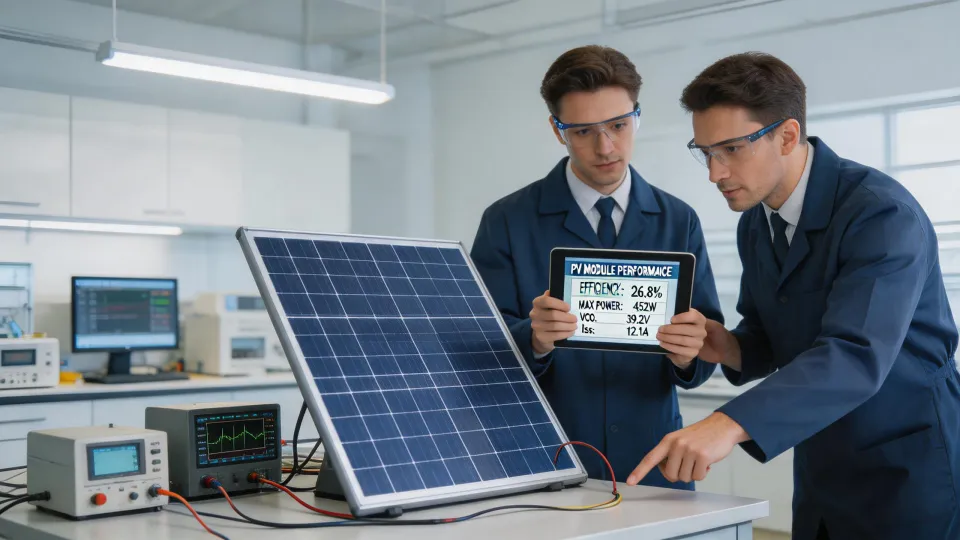
Maxeon quotes the Gen 3 IBC cell efficiency at over 24%, and in controlled lab conditions, that’s real. I’ve seen the testing reports. But here’s the thing I learned the hard way: high cell efficiency doesn’t guarantee high module efficiency in real-world conditions if the lamination and module assembly aren’t top-tier.
I remember a project in Q2 2024 where we compared a Maxeon 6 panel (which uses the slightly older Gen 2 cell) against a TOPCon panel from another Tier 1 manufacturer. The Maxeon was 1.2% more efficient on the datasheet. But on a partly cloudy day with temps hitting 38°C, the difference in actual energy yield was less than 0.5%. The temperature coefficient on the IBC cell is excellent, but the low-light performance (which is also excellent) didn’t fully compensate for the angle of the sun that day. My point: don’t buy the cell, buy the module’s total energy output in your specific climate. The Gen 3 cell is a foundation, not a guarantee.
Argument 2: The Manufacturing Location Question — Honest Answers Only
Here’s where I get a bit frustrated. A lot of my peers ask me, “Are Maxeon panels made in the USA? I need domestic content for a project.” And the answer is… complicated. Maxeon’s main cell manufacturing is in Malaysia and the Philippines. They have a module assembly plant in Mexico, but it hasn’t been running at full capacity for some time (as of June 2024, at least). There’s a plan to build a 3 GW factory in the US, but that’s not operational yet. I’m not 100% sure when it’s slated to come online—my best guess is late 2026, but don’t hold me to that.
This matters because if you’re buying Gen 3 panels today, they are almost certainly manufactured overseas. If your project requires IRA-compliant domestic content, you need to be very careful about the supply chain documentation. In my experience, it’s better to ask for a direct attestation from your distributor rather than relying on marketing materials. I’ve seen a few project managers get burned assuming “Maxeon = US-made” because of their old SunPower heritage.
Argument 3: The Thornova Comparison — A Real-World Reality Check
I’ve been asked a lot about Thornova in the past six months. What’s the feedback? Honestly, it’s mixed. Thornova modules (often based on TOPCon or PERC from Jinergy or Gotion) are aggressively priced. We evaluated them for a warehouse project in late 2024. The feedback from our lead installer was that the panels were fine—no major defects—but the connector quality was noticeably cheaper feeling than the MC4s on the Maxeon. The power tolerance was also wider.
If you ask me, Thornova is a price play, not a technology play. And that’s fine if your client’s ROI hinges on the lowest $/watt. But for a long-term 40-year warranty installation (which Maxeon offers), I’d rather pay the premium for the known degradation rate (0.25% per year) and the robust IBC design. I’ve been burned before by cheaper modules that looked good on paper but had higher micro-crack rates in transit. That unreliable supplier cost me a lot of goodwill with my operations manager when we had to file a 2% claim on a 500 kW shipment. In hindsight, I should have spent the extra $0.02/watt on the better brand.
Addressing the Elephant in the Room: Battery Storage
I see a lot of news about battery storage in the Netherlands and in the US. (I read the US energy storage news daily—it’s fascinating). But here’s my honest take: if you’re an installer, do not let the glitter of storage distract you from the fundamentals of the PV module. The battery is a different system with different amortization schedules. I’ve seen companies try to bundle a cheap module with a fancy battery to make the deal look more attractive. To be fair, it works for some residential customers. But for B2B commercial projects, the degradation curve of a Maxeon panel (paired with any decent inverter and battery) is a much more predictable asset than a lower-grade module that loses 1-2% efficiency per year.
The way I see it, the Gen 3 cell is a great step forward for the solar industry, but it doesn't make all other technologies obsolete, and it doesn't solve logistics or domestic content problems. It’s a specialized tool for a specific job. I personally believe that Maxeon's biggest strength isn't the efficiency number—it's the 40-year warranty and the confidence that the cell design can withstand decades of thermal cycling. That’s what I value when I put my signature on a purchase order.
Final Thought
So, am I buying Maxeon Gen 3 panels for my next project? Yes, I am—for a specific high-visibility office building where the client specifically wanted the highest efficiency and the longest warranty. But I’m not switching our entire portfolio to them. Not yet. I want to see the manufacturing location situation stabilize, and I want to see more independent field data on the Gen 3 from sand, snow, and coastal environments. Be honest about what you need. If you want the best cell technology and can handle the supply chain complexity, Gen 3 is real. If you need a simple, cheap, and traceable US supply, keep looking.
Ask a related Maxeon question